Last updated
Where should a porta potty be placed on site?
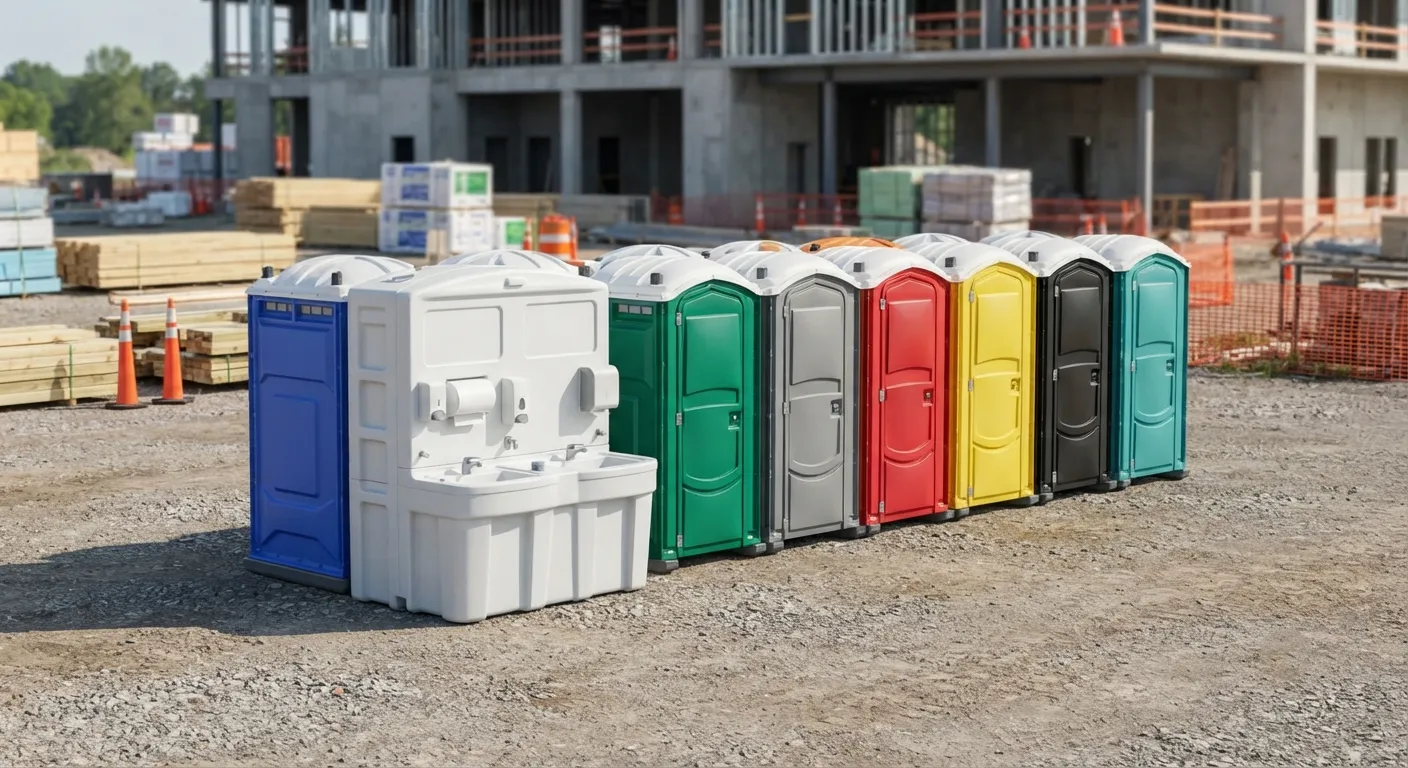
Set units on flat, compacted ground, never on soft grass that will rut once a truck drives over it. Garland Porta Pros looks for a spot within reach of the vacuum hose, since a service truck can't always pull within a few feet of the unit. Keep a clear path at least 36 inches wide to the door, which lines up with ADA Standards section 403.5.1 on accessible routes even for standard units. Avoid low spots that pool water after rain. On construction sites, placement also has to respect OSHA 1926.51(c) toilet ratios, since a unit tucked behind a materials pile that workers won't walk to doesn't count as available. If you're staging a standard porta potty rental alongside a dumpster, give each its own approach lane so the trucks don't compete for the same gate.
Do I need a permit to place a unit in Garland?
Permit rules vary by placement, and anything sitting in the public right of way, a sidewalk, or a street lane needs confirming directly with the city before drop-off. This isn't optional research; a unit blocking a curb cut or fire lane can get tagged and moved at the renter's cost. The same holds for a temporary fence around the unit cluster or a roll-off dumpster staged near a driveway apron. Dumpster placement permit cost and porta potty permit requirements both depend on whether the container sits on private property or public pavement, and Garland's requirements aren't something to guess at. Check our porta potty permit requirements page for what to ask the city, and confirm before delivery day, not after the truck is already on site.
How much clearance does a service truck need?
A roll-off delivery needs about 60 feet of straight clearance behind the truck, and portable toilet service trucks need a comparable straight shot to swing the vacuum arm into place. That's the number to measure before delivery, not after the truck is idling in the driveway. If your site is tight, a job in Rowlett 5.5 miles east or Sachse 6.6 miles northeast might have more room to stage than a downtown Garland lot boxed in by adjacent buildings. Measure twice for ADA accessible units too, since those cabins are larger and need a full 60 inch turning circle inside per ADA Standards section 304.3.1, plus a 32 inch clear door opening under ADA Standards section 404.2.3. Cramped placement defeats the purpose of ordering the accessible unit in the first place.
Where should a dumpster or storage container go?
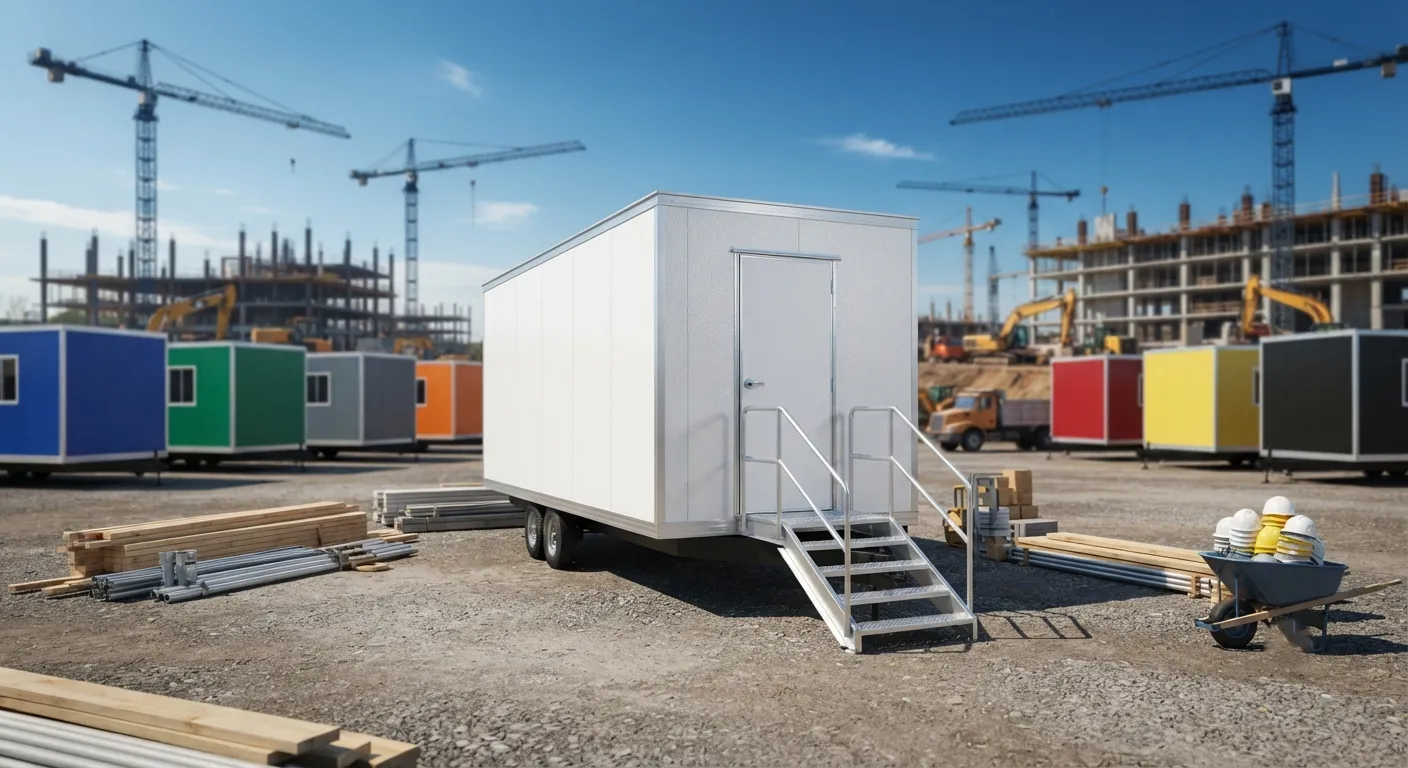
Same rules, bigger footprint. A roll-off dumpster rental needs that 60 foot straight approach behind it, and the pad underneath has to hold the container's full loaded weight without sinking, which matters more on the clay-heavy soil common around Garland. Keep dumpsters off septic fields entirely; a full container can crush buried pipe. If you're renting a storage container for the same job, place it where a forklift or crane truck can set it without crossing underground lines. A mobile office trailer rental needs a level pad too, and if an older unit on-site has damaged mobile office trailer replacement doors, that's a maintenance call, not a placement fix, worth flagging when you request the trailer. For handwashing near the dumpster or porta potty cluster, a handwashing station rental or portable sink rental satisfies 29 CFR 1910.141(d)(2), which requires soap and a way to dry hands, not just sanitizer. If a unit needs an ozark river portable sink replacement parts search, get the part number before service day so the tech isn't guessing.
Septic work follows different placement logic. A grease interceptor gets pumped once fats, oils, grease and solids build up to 25 percent of the liquid depth, and a residential tank typically needs pumping every 3 to 5 years depending on size and household use. Anyone searching placerville septic pumping service while comparing quotes should know Garland Porta Pros handles septic pumping and grease trap pumping locally, with the pump truck needing the same clear approach as a dumpster delivery. For an event with a restroom trailer rental, place the trailer on the flattest ground on-site since these units carry their own tanks and don't tolerate a slope well.
Placement clearance quick reference
| item | minimum clearance/spec | source |
|---|---|---|
| service truck approach | 60 feet straight | measured spec |
| accessible route width | 36 inches | ADA 403.5.1 |
| accessible door opening | 32 inches | ADA 404.2.3 |
| turning circle inside ADA unit | 60 inch diameter | ADA 304.3.1 |
| grease interceptor pump trigger | 25% FOG depth | measured spec |
Can I place a porta potty on a septic field?
No. Weight from the unit and foot traffic can crush pipe or a leach line over time. Set units on solid ground away from the field, and if you're unsure where the field runs, ask before placing anything heavy nearby.
Does a construction site need more than one unit?
Usually yes. OSHA 1926.51(c) sets ratios starting at 1 toilet for 20 workers or fewer, scaling up as headcount grows. Use our how many porta potties do I need guide to match unit count to crew size before ordering.
Where do I put a unit for a backyard event?
Pick flat ground near a gate wide enough for delivery, ideally within 50 feet of where the truck parks. Keep it off septic lines and away from low spots that collect water after storms.
How far from the property line does placement need to be?
That depends on Garland's specific rules for the site type, and it's worth confirming with the city before delivery, especially near a shared fence line or a neighbor's driveway.
Do I need a permit for a short driveway rental?
Often not, if the unit stays fully on private property. Anything touching a curb, sidewalk or street lane is where permit questions start, so confirm placement first.
Next step
Get a delivery date
Tell us the address, the dates and the headcount. We size the order and confirm the route.