
Last updated
How Many Restrooms Does a County Fair Need?
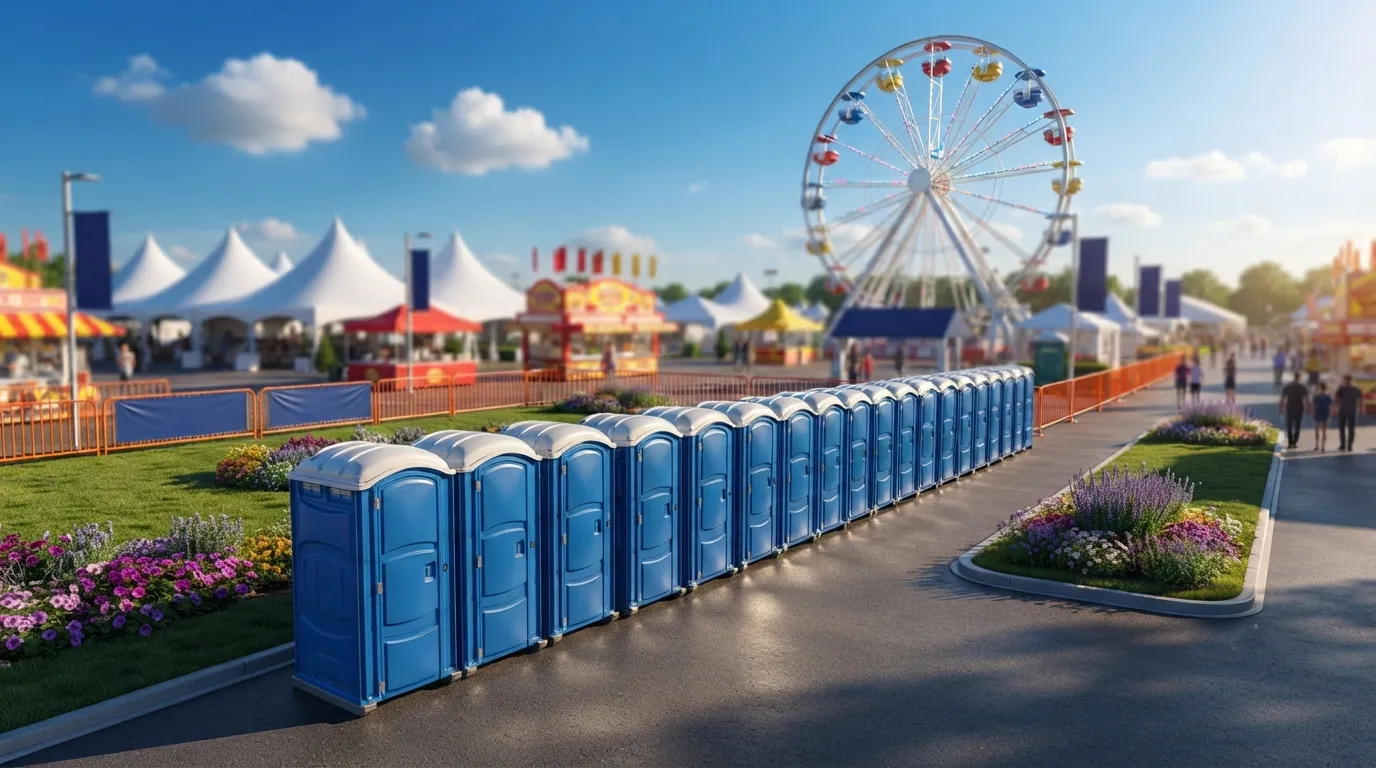
Start with attendance, then work backward. Fairground crowds are heavier than office crews, so the OSHA 1926.51(c) construction ratio does not apply here; that standard covers job sites, capping out at 1 toilet and 1 urinal per 50 workers once headcount hits 200. A fair is a different animal. Most event planners in Garland lean on roughly 1 toilet per 100 attendees for a single day, then add units if beer sales or long food lines push wait times up. For a three-day fair, that number holds steady per day, since ANSI/PSAI Z4.3 sets the baseline service interval at once weekly for up to 10 users over a 40-hour week, so heavy weekend traffic needs a mid-run service, not just a Monday pickup.
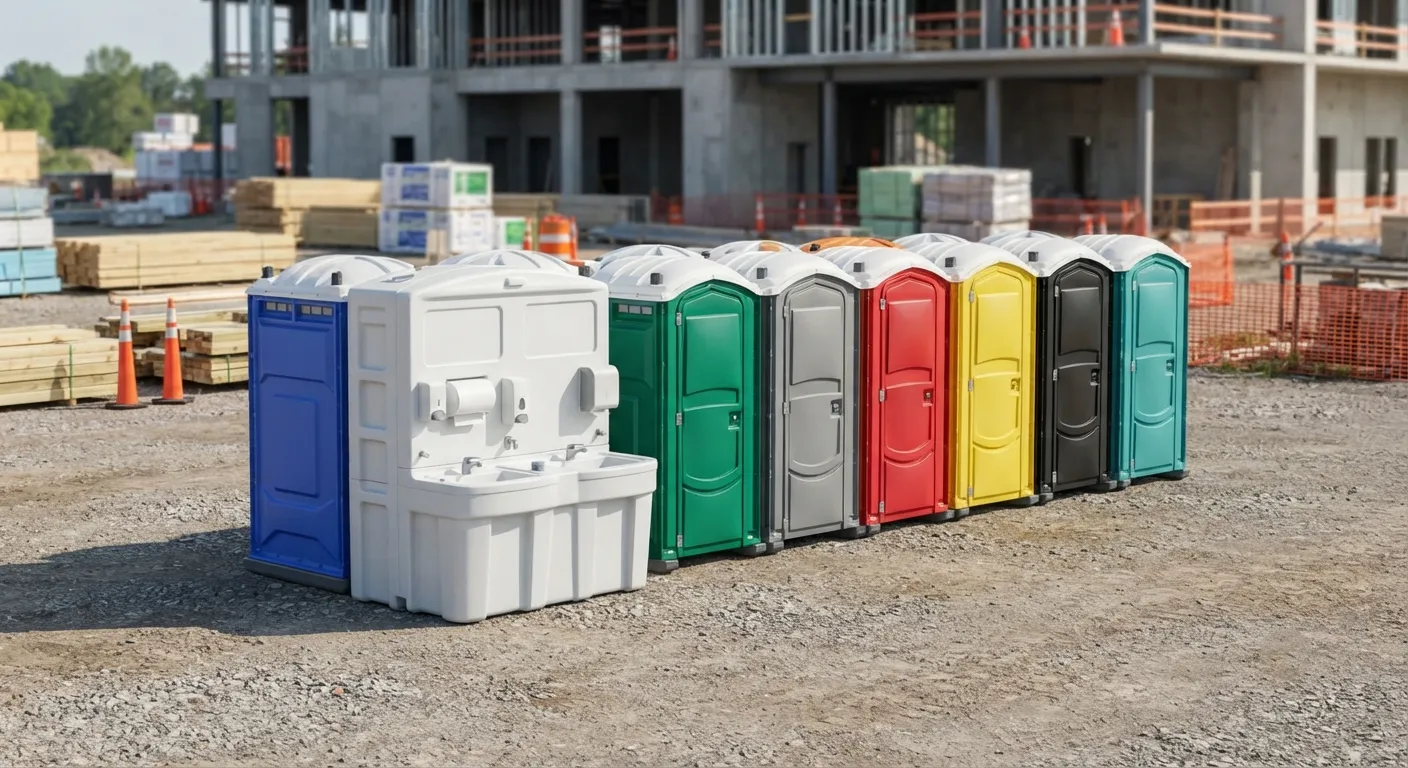
Mix your fleet. A gate near the main stage might get deluxe flushable units for VIP ticket holders, while the midway gets a run of standard porta potties. Under ADA Standards section 213.2, at least 5 percent of any cluster of single-user units must be wheelchair accessible, never fewer than one, so a 30-unit fairground layout needs at least two ADA-accessible units spaced near the accessible parking and main walkways. If your fair runs food vendors, pair the restroom count with a handwashing station rental near each booth; 29 CFR 1910.141(d)(2) requires soap and towels or a hand-drying device at wash stations, not sanitizer alone. Not sure on the math? Our how many porta potties do I need guide walks the ratio for any crowd size, and we will run the count for you free on a quote request.
Where Should Restrooms Go on a Fairground?
Placement decides whether people actually use the units or complain about lines. Spread clusters at every entrance, near the grandstand, by the livestock barns, and at the far end of the midway so nobody walks more than a couple hundred feet. Every accessible unit needs a clear, stable path per ADA Standards section 302.1, which calls for firm, slip-resistant ground, and a 60-inch turning circle in front of the door per ADA Standards section 304.3.1 so a wheelchair can turn without backing into a fence post. Gravel and mowed grass both work if they're compacted; loose sand or mud does not.
Keep units off the parade route and away from generator exhaust. If your fair uses a temporary fence rental to route foot traffic, run restroom clusters just inside the fence line so servicing trucks can reach them without crossing the crowd. Our trucks need about 60 feet of straight clearance behind each unit cluster for pump-outs, which matters most at grounds with tight access roads. Garland fairground layouts often route service vehicles along the same lanes used for roll-off dumpster rental delivery, so plan restroom and dumpster placement together rather than as separate afterthoughts. If your event runs after dark, pair restroom zones with a light tower rental since dim paths near a portable toilet cluster are the number one complaint we hear from fair staff.
For multi-day fairs with camping or RV areas, add a shower trailer rental or a larger 8 stall restroom trailer near the overnight lots. Rowlett fairgrounds sit about 5.5 miles east of central Garland, and we service both without a second delivery charge tier, same as fair sites toward Sachse, 6.6 miles northeast.
What Does It Cost to Rent Fair Restrooms in Garland?
Fair pricing runs by event day, not a flat weekly rate, since most county fairs book 2 to 5 days rather than a full week.
| unit | day rate | typical event range |
|---|---|---|
| standard | $100 - $350 | $200 - $800 |
| ada | $200 - $400 | included in event quote |
| deluxe | $85 - $1,200 | quoted per fair |
| restroom trailer | $175 - $2,500 | $2,499 - $3,899 |
Delivery fees for a multi-day fair typically land in the $100 to $500 per-day band, though most fairs negotiate a flat delivery charge covering the whole run. A service fee for mid-event pump-outs on a heavy-traffic fairground usually falls between $100 and $300 per day. For exact math on your gate count, check our porta potty rental cost breakdown or the restroom trailer rental cost page if you're adding a trailer for sponsors or staff. Garland fairs that also need a storage container rental for supplies or a mobile office trailer rental for fair staff can bundle delivery with the restroom order to cut down on separate truck trips.
How far in advance should I book fair restrooms?
Book as soon as your gate estimate firms up, ideally 60 to 90 days out. Fair season stacks bookings fast across Garland and toward Mesquite, 13.3 miles south, so popular dates lock in early. Waiting until the week of the fair usually means a smaller unit selection.
Can I rent restroom trailers instead of standard units for a fair?
Yes. A restroom trailer rental works well for sponsor areas, VIP sections, or overnight fairgrounds with camping. A 2 stall restroom trailer suits a small VIP tent; larger fairs often need the 4 or 8 stall versions near the main gate.
Do fair restrooms need to be serviced mid-event?
Heavy multi-day fairs almost always need a mid-run service, not just delivery and pickup. ANSI/PSAI Z4.3's baseline interval assumes 10 users per unit weekly; a fair crowd blows past that fast, so we schedule extra pump-outs into the contract upfront.
What is the difference between standard and deluxe units for a fair?
Standard units cover general midway and gate traffic at a lower day rate. Deluxe flushable units add a flush mechanism and nicer interior finish, usually placed near VIP areas, sponsor tents, or grandstand sections where guests expect more than a basic setup.
Can fair organizers get ADA units without ordering a full cluster?
Yes. Even a single-cluster fair needs at least one accessible unit under ADA Standards section 213.2. We deliver standalone ADA units sized to fit standard delivery routes, with a 60-inch turning circle in front per section 304.3.1.
Next step
Get a delivery date
Tell us the address, the dates and the headcount. We size the order and confirm the route.