
Last updated
How Do Porta Potties Work?
The tank sits directly under the seat. A blue chemical deodorizer breaks down waste and controls smell between service visits. There's no water supply on a standard porta potty rental, so nothing flushes; the seat just closes over the tank opening. A vent pipe runs up the back of the unit to pull odor out and away from the door, which is why placement and airflow matter more than people expect on a porta potty placement guide. A standard unit measures about 44 by 48 inches on the ground and stands roughly 92 inches tall, so it fits tight lots around Garland without much fuss. Service techs pump the tank, rinse it, and restock the chemical on whatever interval the rental calls for. ANSI/PSAI Z4.3 sets the baseline service interval at once a week for up to 10 users over a 40 hour week, which is why a busy construction site services job often needs a tighter schedule than a weekend backyard rental.
How Do Flushable Porta Potties Work?
A deluxe flushable porta potty adds a fresh water tank and a foot pump or pressurized flush that pushes a small rinse of water into the holding tank after each use. It still doesn't connect to sewer. The fresh water and waste stay in two separate tanks inside the same unit, so the "flush" is really just a rinse cycle, not a sewer connection. These units run higher than a standard rental because of the added plumbing, and they're the common pick for weddings and anything booked through event restroom rental rather than a job site. A restroom trailer rental takes this further with sinks, mirrors, and multiple stalls, which is why venues booking something like a 4 stall restroom trailer skip single units entirely.
How Does a Portable Sink Work?
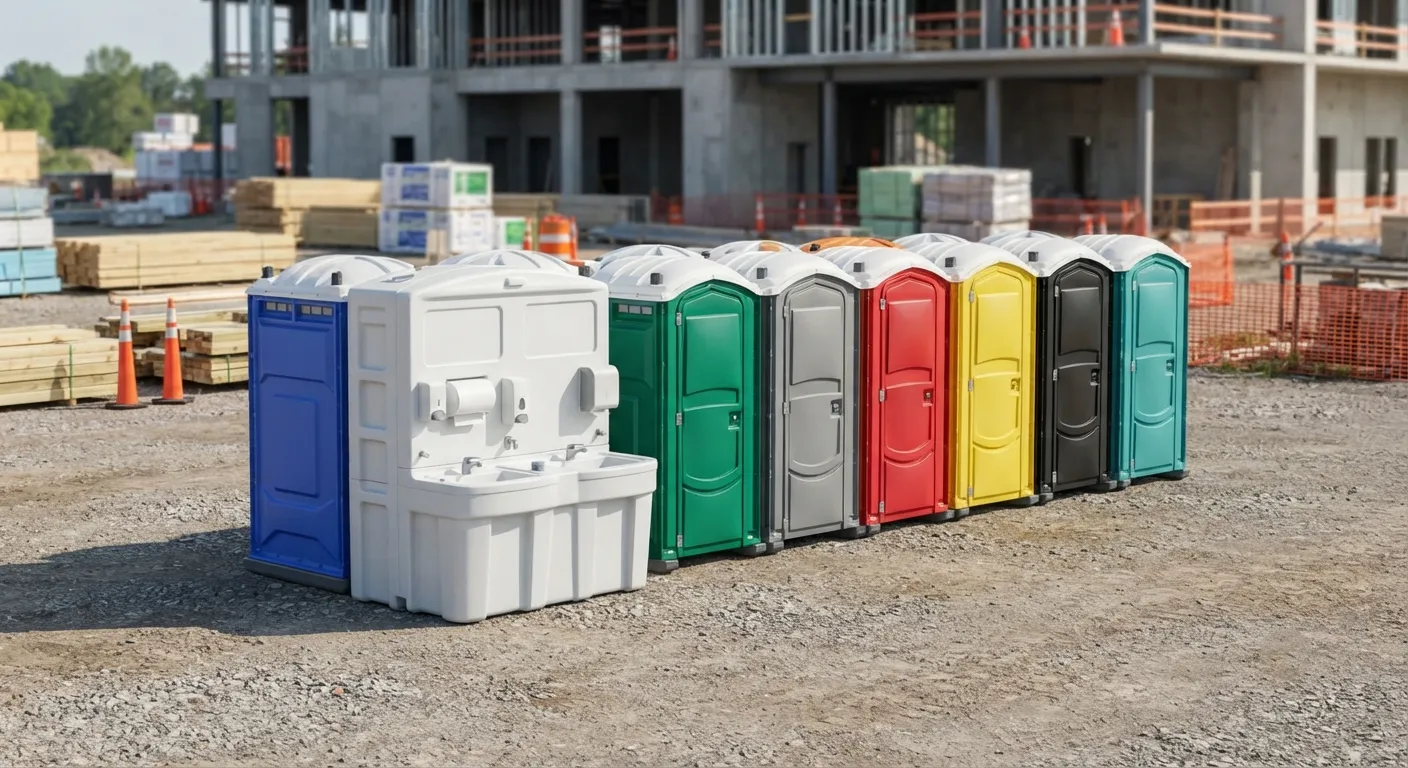
A portable sink rental or handwashing station rental works off a fresh water reservoir, usually gravity fed or foot pumped, that runs over a basin and drains into a separate gray water tank underneath. Soap dispensers mount on the unit itself. This matters under 29 CFR 1910.141(d)(2), which requires soap and towels or a hand drying device at washing facilities; hand sanitizer alone doesn't meet that standard. OSHA 1926.51(f)(1) requires washing facilities specifically where crews are applying paints, coatings, herbicides or insecticides, so a painting crew in Garland needs a real handwash station nearby, not just a hand sanitizer station rental parked at the gate. For general sanitation and toilet counts on a job site, OSHA 1926.51(c) sets the ratio of toilets to workers, and that's the standard crews outside those specific trades should check. A construction worker running to a porta potty on break still needs a working sink close by if the crew handles those materials.
Do Camping Porta Potties Work the Same Way?
Camping and event units run on the same tank-and-chemical system as job site units, just sized for shorter stays and lighter traffic. A camping porta potty rental usually skips the flush mechanism and sticks with a standard holding tank, since campsites often sit further from a service route than a Garland construction lot. Distance affects delivery too. A site out past Rowlett, 5.5 miles east of Garland, or Sachse, 6.6 miles northeast, still gets the same unit and the same chemical treatment, just on a delivery route that factors in drive time. Farms and agricultural operations fall under different rules entirely: OSHA 1928.110 requires potable water, toilets, and handwashing for hand-labor employees, at one facility per 20 workers, within a quarter mile walk, which is a tighter standard than most job sites see. That's relevant for anyone running farm and agricultural restrooms near Garland's outer edges.
Unit Comparison
| Unit type | Flush mechanism | Typical use | Weekly price range |
|---|---|---|---|
| Standard | None, tank only | Construction, general rental | $130 to $500 |
| Deluxe flushable | Foot pump or pressurized rinse | Weddings, events | $150 to $290 |
| ADA accessible | Tank only, wider interior | Job sites, public events | $120 to $240 |
Pricing depends on duration and unit type; check porta potty rental cost or monthly porta potty rental for a fuller breakdown before booking.
What chemicals go in a porta potty?
The blue liquid in the tank is a deodorizer and waste-breakdown treatment, not a cleaning chemical for the surfaces you touch. It controls odor and helps liquefy solid waste between pump-outs. Techs add it fresh at every service visit, which is standard practice across portable toilet rental fleets.
How often does a porta potty get serviced?
ANSI/PSAI Z4.3 sets the baseline at once weekly for up to 10 users over a 40 hour week, though busy sites need more. Heavy-traffic events or large crews often get serviced two or three times a week. See how often are porta potties cleaned for interval details by use case.
Can I use a porta potty in freezing weather?
Yes, with adjustments. Standard chemical treatments change in colder months, and tanks need attention so nothing freezes solid. Garland doesn't see extended deep freezes often, but a cold snap still calls for planning. Check porta potty in winter for what changes.
How does an ADA porta potty differ from a standard unit?
An ADA unit is wider inside, with a 60 inch turning circle per ADA Standards 304.3.1 and a 32 inch minimum door opening under ADA Standards 404.2.3. ADA Standards 213.2 requires at least 5 percent of clustered units be accessible. Details are on ADA accessible porta potty.
Do septic tanks need chemical cleaning too?
Septic tanks aren't typically maintained with the same chemical additives as porta potties. A residential tank usually needs pumping every 3 to 5 years depending on tank size and household size. See how often to pump a septic tank or septic tank warning signs for more.
Next step
Get a delivery date
Tell us the address, the dates and the headcount. We size the order and confirm the route.